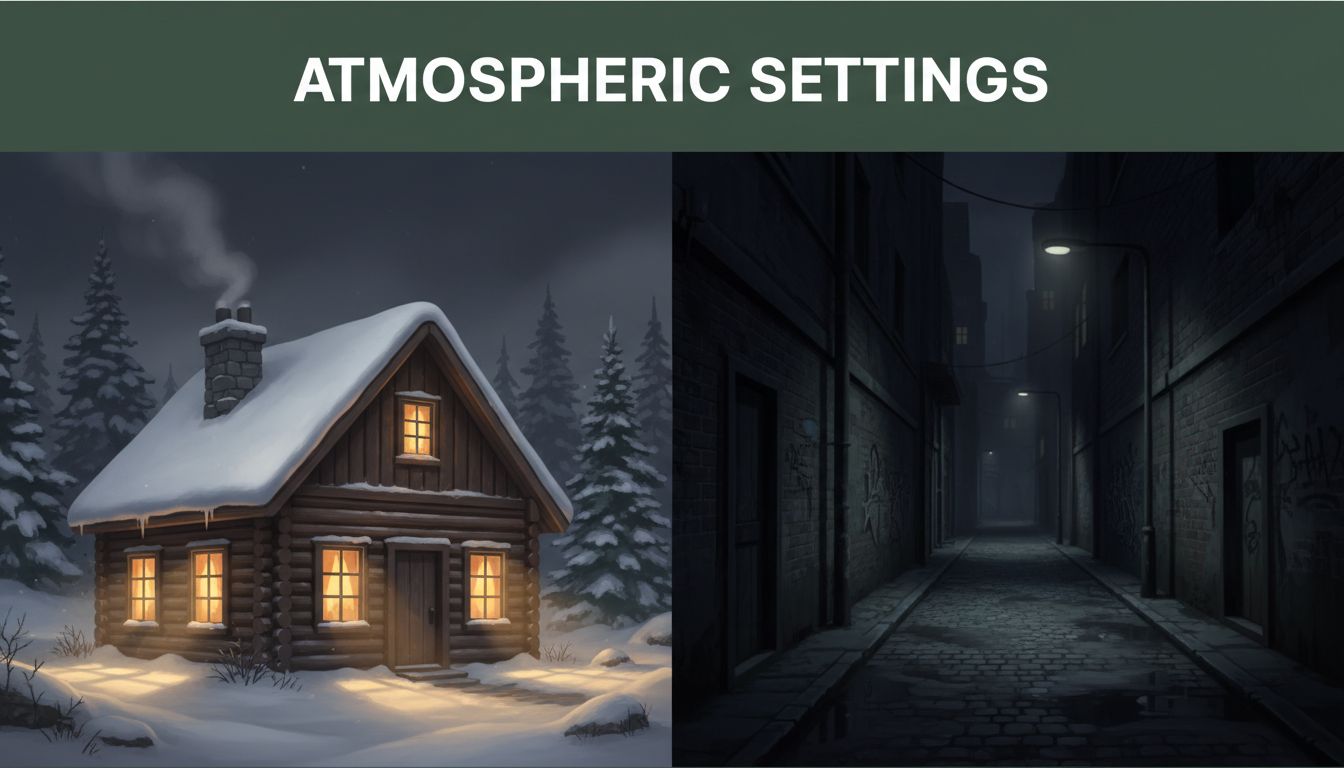
Picture a cozy cabin blanketed in snow. Warm light spills from the windows. Now imagine a dark alley at midnight. Shadows twist around every corner.
These scenes hit you differently because setting controls your feelings without a single word from characters. It builds the mood and atmosphere that pulls you into a narrative. You feel safe in one, scared in the other.
This post breaks down setting’s key parts, how it shapes emotions, real examples from famous stories, and tips to use it better. Let’s see why location, time, and details matter so much.
The Key Parts That Make Up a Story’s Setting
Setting goes beyond a simple backdrop. It includes where the action happens, when it takes place, and how the environment feels. These elements form the foundation for mood. Writers layer them to guide reader emotions from the start.
Location sets the physical stage. Time adds context through eras or moments. Details like weather or culture fill in the texture. Together, they create an immersive world. For example, a foggy harbor suggests mystery right away.
Because setting anchors everything, it influences how readers react to plot and characters. Strong choices here make weak stories stronger.
Picking the Right Location to Set the Tone
Choose locations that match your story’s emotional core. A bustling city market buzzes with energy and chaos. People shout, colors clash, and smells mix. This spot fits fast-paced tales of ambition or conflict.
An empty desert, on the other hand, evokes deep loneliness. Vast sands stretch forever under a harsh sun. No one around means isolation hits hard. Geography guides feelings like this. Mountains might build awe or fear of heights.
To pick well, ask what emotion drives your narrative. Then find a place that amplifies it. Cities for tension, quiet farms for peace. This keeps readers locked in from page one.
Time and Weather as Mood Makers
Time periods shape atmosphere too. A medieval castle at dusk feels ancient and secretive. Dawn in a modern office brings fresh hope for the day ahead.
Weather amps up these effects. Rain patters on windows and adds melancholy. It slows scenes and mirrors sadness inside characters. Sunshine, however, sparks joy and openness. Clear skies lift spirits during triumphs.
Real life shows this works. Stormy days make us tense, calm ones relax us. Writers tap that. They weave time and weather into the flow so mood builds naturally.
How Setting Sneakily Shapes Emotions and Tension
Setting works like a quiet director. It uses senses, symbols, and space to stir feelings. Readers sense tension rise or calm settle without direct tells.
First, details sneak in through actions. A door creaks open in silence. Wind howls outside. These build unease step by step. Writers control pace this way.
Symbols hide deeper meanings in plain sight. Contrasts sharpen drama. Open areas free characters; tight spots trap them. All this heightens emotional stakes.
Sensory Details That Pull Readers Right In
Senses make setting alive. Sight paints vivid pictures, like golden leaves falling in autumn woods. Sound adds layers, such as distant thunder rumbling low.
Smell hits deep. Fresh bread warms a kitchen scene. Rotting garbage turns stomachs in a slum. Touch chills with icy wind on skin. Taste lingers, like bitter coffee during heartbreak.
All five pull readers close. Creaky wooden floors signal danger in a haunted house. You hear it, feel the splinters. This immersion makes mood stick. Skip one sense, and the world feels flat.
Symbols and Clues Hidden in the Background
Objects in setting stand for bigger ideas. A wilted garden shows lost love or decay. It foreshadows trouble without spelling it out.
Places do this too. A crumbling church hints at faded faith. Readers pick up clues subconsciously. This layers meaning and builds atmosphere.
Writers plant these early. They pay off later. The symbol ties emotions to plot. It feels organic, not forced.
Using Space to Ramp Up or Calm Tension
Space controls breathing room. Wide fields offer freedom. Characters run free, thoughts expand. Tension drops here.
Tight rooms cram people close. Walls press in during arguments. Claustrophobia builds fast. Crowds add pressure; solitude invites reflection.
Mix them for effect. Start wide, shrink to small. Or flip it. This ramps drama or eases it. Readers feel the shift physically.
Real Stories Where Setting Steals the Show
Famous books prove setting’s power. It drives mood and plot in ways characters alone can’t. Let’s look at three classics.
Hogwarts sets magic against teen struggles. The Overlook traps horror in isolation. Maycomb’s heat boils with injustice. Each place owns the atmosphere.
Hogwarts: Where Magic Feels Alive and Mysterious
J.K. Rowling’s Hogwarts pulses with wonder and danger. Moving staircases shift without warning. Enchanted ceilings mirror starry skies or storms.
These details mirror Harry Potter’s confusion. The castle feels alive, full of secrets. Great Hall feasts build community warmth. Forbidden Forest edges whisper threats.
Setting reflects growth too. As Harry ages, darker corners loom larger. Magic thrives here because the place demands it.
The Overlook Hotel: Trapped in Chilling Isolation
Stephen King’s Overlook Hotel isolates Jack Torrance’s family. Endless hedge mazes twist outside. Snowstorms bury roads for months.
Halls echo with ghosts. Boilers rumble like hidden rage. Storms rage, matching Jack’s madness. No escape amps dread.
The hotel feels alive, predatory. It preys on weaknesses. Isolation turns personal fears public.
Maycomb’s Sweltering Streets: Heat Mirrors Injustice
Harper Lee’s Maycomb simmers under Alabama heat. Dusty roads bake in summer sun. Courthouses sag with age.
This small-town stickiness slows time. It mirrors prejudice’s grip. Scout walks hot streets, feels bias everywhere.
Heat builds frustration, like the trial’s tension. Setting underscores social mood without preaching.
Easy Ways to Make Your Settings Work Harder
Writers can level up settings with practice. Integrate details smartly. Match them to characters. Test changes for punch.
Avoid dumps of description. Weave them in. This keeps pace brisk and mood strong.
Layer Details Without Overloading the Reader
Show setting through action. A character slips on wet leaves instead of listing rain. Plot moves while atmosphere builds.
Balance is key. One strong image per scene suffices. Too many bog things down. Revise drafts to cut excess.
Readers stay engaged because details serve the story.
Match the Place to Your Characters’ Inner World
Let setting echo emotions. A hero’s rage fits stormy seas. Peace comes in sunlit meadows.
Evolve it with them. Town decays as hope fades. Or blooms with victory. This deepens connections.
Examples abound. Change mirrors inner shifts perfectly.
Test and Tweak for Maximum Impact
Swap settings in drafts. What if the chase happens in woods, not streets? Read aloud for flow.
Get feedback. Ask if mood lands. Does tension build? Adjust based on reactions.
Quick exercises sharpen skills. Mood hits home every time.
Setting crafts the emotional heart of any narrative. It pulls readers in, builds tension, and mirrors themes through location, time, and details.
Strong settings make stories memorable. Try layering one sensory detail in your next scene. You’ll connect deeper with readers.
What setting will you build today?