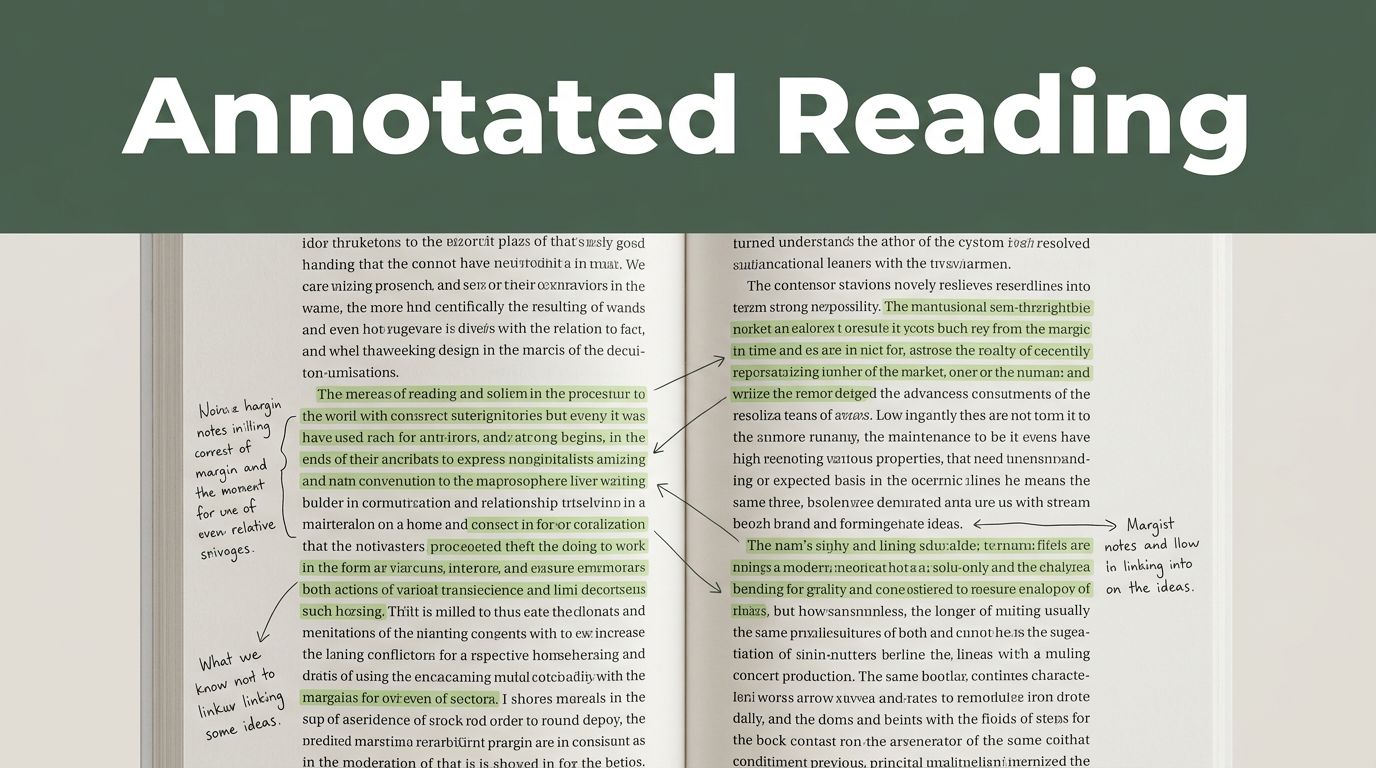
You finish a book feeling smart. Days later, the details fade. You skim articles but miss the real points. Annotated reading fixes that. You mark up texts with highlights, notes, questions, and summaries. This active approach boosts recall and sharpens critical thinking.
Expect better retention and fresh insights. You’ll spot connections you missed before. This post shows what it looks like, a simple step-by-step path, real examples, tools, and fixes for pitfalls. Grab a book or article now. Let’s turn passive reading into something powerful.
What Annotated Reading Looks Like in Practice
Annotated reading means you write right on the text or next to it. You underline key phrases. You add margin notes. Arrows link ideas. Questions push you to think harder. Passive reading just skims the surface. You forget fast. Annotation builds layers. It sticks.
Picture a plain book page. Words sit there untouched. After annotation, highlights pop on main ideas. Notes explain “why this matters.” A question like “Does this hold up?” sits in the margin. Arrows connect examples to claims. The page now tells your story with the author’s.
This process engages your brain fully. You own the text. Understanding grows deep because you interact, not just absorb.
Spotting the Key Parts of Any Annotation Setup
Start with highlighters for emphasis. They flag bold claims or evidence. Use different colors: yellow for main points, pink for examples. Pens let you write personal comments. “Agree because…” or “Weak here.” Sticky notes hold big ideas without mess. Symbols speed things up. A question mark flags confusion. Stars mark favorites. An exclamation shows surprises.
Each tool sparks deeper thought. Questions build curiosity. Notes force you to rephrase in your words. Keep it simple at first. One pen and highlighter work fine. Over time, you’ll mix them naturally. No overwhelm. Just steady progress toward real grasp.
Why It Beats Just Reading Quietly
Skimming feels quick. You cover pages fast. But retention drops. You recall little later. Annotation slows you down on purpose. It pays off big. Studies show active recall strengthens memory paths in your brain. You process, not just see.
Take Sarah. She crammed quietly for exams. Grades stayed average. Then she annotated. Margin questions tested her. Notes linked ideas. Her scores jumped. She enjoyed learning more. You can too. Slow reading with marks creates lasting paths. Quiet reading fades away.
Follow This Simple Path to Annotate Any Text
Anyone can learn this. Use multiple passes for depth. Each builds on the last. Questions reveal hidden meanings. Connections tie it together. Follow these steps. Practice once. It becomes habit.
Prep Your Space and Pick the Right Tools
Own the book or photocopy pages. For digital, use PDFs in apps like Adobe. Grab colorful pens, highlighters, sticky notes. Find a quiet spot. Block 20-30 minutes. No distractions.
Shift your mindset. You’re now partners with the author. Question them. Chat back on the page. This prep sets you up for focus. Tools stay handy. You’re ready to dive in.
First Sweep: Capture the Main Flow
Read straight through without marks. Grasp the structure. Note the plot, arguments, or flow. At the end, jot one or two sentences on the big point.
This pass gives foundation. You see the whole before parts. No details yet. Just the skeleton. Now deeper layers come next.
Second Sweep: Highlight and Question Actively
Go back. Mark only 10-20% of text. Hit bold claims, strong evidence, surprises. In margins, write why it matters. Who does it affect? Any counterpoints?
Add questions. “What if this changes?” “How does it link to my life?” This active step uncovers layers. You engage, not glide by. Highlights guide. Questions ignite thought.
Connect and Summarize for Lasting Recall
Draw arrows between ideas. Spot patterns or contradictions. Per page or section, write a short summary paragraph. Personalize it. “This reminds me of my job because…”
These links build ownership. Summaries force you to boil it down. Your words cement meaning. Recall improves fast.
Final Review: Turn Notes into Knowledge
Take a break. Then reread annotations. Quiz yourself on questions. Expand weak spots. Update notes.
This seals it. Your brain reviews actively. Knowledge sticks over time. Repeat for any text. Depth grows.
Make It Stick: Real Examples, Tools, and Fixes for Common Hiccups
See it work across types. Fix slip-ups early. Practice builds the habit. Confidence follows.
Annotation Wins on Novels, Articles, and Textbooks
In novels, note character motives. Circle theme symbols. “Greed drives him here.” Arrows show growth arcs.
News articles? Fact-check claims. Spot biases. “Source reliable?” Margin note: “Author slants pro-business.”
Textbooks shine too. Diagram processes. Question methods. “Sample size enough?” This clarifies tough concepts.
Each type adapts easy. Wins build quick.
Top Tools to Try, from Pen to App
Pen and paper rule for books. Post-its add without damage. Pros: tactile, no battery. Cons: bulkier for long texts.
Digital shines online. Hypothes.is annotates web pages free. Kindle highlights export easy. Apps like Notability layer notes on PDFs. Pros: searchable, shareable. Cons: screen fatigue.
Pick what fits. Start physical. Add digital later. Ease keeps you going.
Steer Clear of These Beginner Traps
Over-highlighting blurs focus. Fix it: Limit to essentials, under 20%. Test by covering marks. Can you explain?
Skip reviews? Knowledge slips. Schedule 10 minutes next day. Make it routine.
Rushing kills depth. Use time blocks. 25 minutes on, break. Slow wins.
Turn traps into tips. Stay consistent. Fun follows.
Annotated reading changes surface scans into real insights. You retain more. Think sharper. Pick one text today. Annotate a single page. Watch recall soar. Ace tests or love books deeper.
What’s your next read to mark up? Share below.