I never thought the forest held secrets until that night. My flashlight beam cut through the dark. Branches snapped under my feet, and every shadow seemed alive.
Point of view shapes how you experience a story. It decides whose eyes you see through. Beginners often miss these shifts. That confusion pulls you out of the tale.
Mastering point of view boosts your reading joy. You analyze books better. Plus, it sharpens your own writing. This guide covers the basics. Then spot each type with clues and examples. Finally, grab quick tips. Ready to spot POV like a pro?
Grasp the Basics of Point of View First
Point of view sets the story’s lens. It picks whose perspective guides you. Writers choose it to build tension or connection.
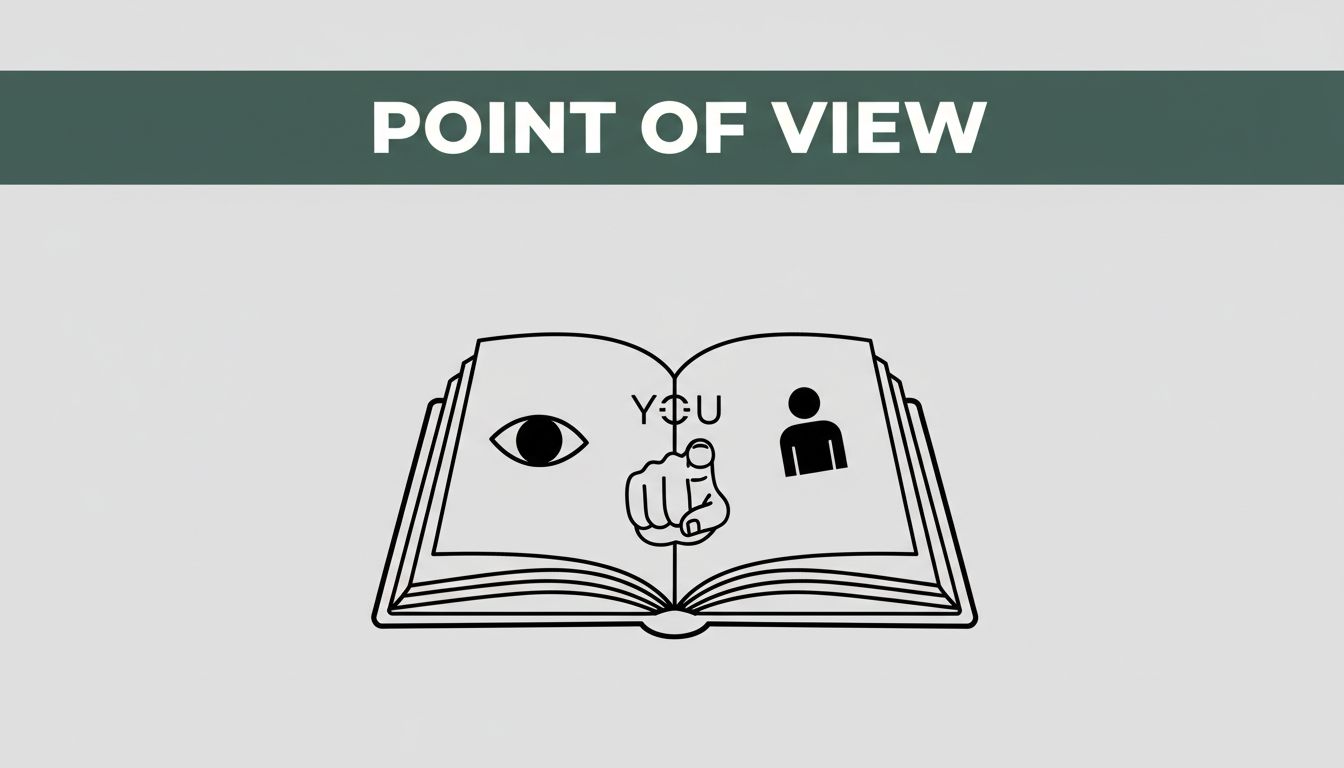
Three main types exist. First-person uses “I” or “we.” Second-person says “you.” Third-person names “he,” “she,” or “they.”
Stories pick first-person for raw emotion. Think diary confessions. Second-person pulls you in deep. It feels like your adventure. Third-person offers wide views. You see multiple angles.
This base helps you detect POV fast. No guesswork needed.
Here’s a quick comparison of pronouns:
| POV Type | Key Pronouns | Example Snippet |
|---|---|---|
| First | I, me, my, we | I ran from the shadow. |
| Second | You, your | You grab the sword. |
| Third | He, she, they, names | Sarah hid behind the tree. |
Pronouns signal the type right away. They act like fingerprints. Once you know them, stories open up. Next, dive into first-person details.
Spot First-Person POV with Confidence
First-person narration feels close. The character shares their own tale. You hear their inner world. It builds trust fast.
Clues pop early. Look for “I” everywhere. The view stays narrow. No peeks into others’ minds. That bias adds flavor.
Writers love it for voice. Readers bond quick. But it limits scope. You miss outside facts.
Pros: Deep emotion. Strong character tone.
Cons: One-sided info. No full picture.
Examples fill bookshelves. Harry Potter starts with Harry’s thoughts. The Hunger Games grips through Katniss’s fear.
Spot it anywhere. Practice builds speed.
Key Pronouns and Clues That Scream ‘First Person’
“I” dominates first-person. Add “me,” “my,” “mine,” or “myself.” Plural “we” or “us” fits group tales.
The narrator shares only their knowledge. They guess at others’ feelings. No secrets revealed.
Check this sentence: I ran as fast as I could. My heart pounded wild.
Other signs include:
- Personal thoughts: I wondered if she lied.
- Senses from one spot: My hands shook cold.
- Past tense often: I had seen enough.
Contrast helps. No “you” commands. Few full names for others. It stays inside one head. Bold pronouns jump out. Train your eye there first.
Real Examples from Books and Stories
Books make it clear. Percy Jackson kicks off: “I accidentally vaporized my pre-algebra teacher.” Rick Riordan nails the kid’s shock.
Diary of a Wimpy Kid uses it too. Greg writes: “I knew the cheese touch would ruin me.” His worries feel real.
Movies echo this. In The Martian, Mark Watney logs: “I’m stranded. But I’ll survive.” Solo logs build grit.
Grab your copy. Read the opener. Does “I” lead? That’s first-person. It pulls you into chaos or laughs. Test it now.
Unlock Second-Person POV and Its Rare Magic
Second-person turns you into the hero. “You” drives every move. It immerses like no other.
Rare choice, but powerful. Pronouns stay “you,” “your,” “yours.” No “I” narrator. Direct hits land hard.
Pros shine in short bursts. You live the action. Cons? Tough to hold long. Readers tire of constant “you.”
Writers save it for specials. Think interactive tales. It breaks the fourth wall.
Spot it quick. “You” commands the page.
Pronouns That Make You the Star
“You” owns the show. “Your” and “yours” follow close. Actions point straight at you.
Example: You turn the corner. Your eyes lock on the dragon.
No names or “he/she.” It chats like a guide. Commands pull you: You must choose now.
Signs include:
- Direct steps: You lift the lid.
- Sensory hits: Your skin prickles.
- Choices posed: You decide the path.
It mimics talks with friends. “You” feels personal. No escape.
Everyday Spots to Find Second-Person Writing
Books lead. Choose Your Own Adventure says: “You enter the cave. Do you fight?”
Songs dip in. “If you leave me now” from Chicago tugs direct.
Recipes use it: “You preheat the oven.” Simple guide.
Novels like Bright Lights, Big City open: “You are not the kind of guy…” Jay McInerney blurs lines.
Games thrive here. Interactive fiction scripts “Your quest begins.” Modern apps echo that pull. Hunt these spots daily.
Master Third-Person POV Variations
Third-person steps back. An outside voice tells all. Flexible for big worlds.
It splits two ways. Limited sticks to one mind. Omniscient knows everything.
Pronouns shift to “he,” “she,” “it,” “they.” Names fill gaps.
Most novels pick it. Broad scope fits epics. Emotion dips lower than first-person.
Clues lie in range. How many heads does it enter?
Third-Person Limited vs Omniscient: Spot the Difference
Limited hones one view. “She wondered if he knew her secret.” Stays with her doubt.
Omniscient jumps free. “She worried. Meanwhile, he smirked, plotting revenge.”
Here’s the breakdown:
| Feature | Limited | Omniscient |
|---|---|---|
| Thoughts | One character’s | Everyone’s |
| Knowledge | Narrow focus | God-like overview |
| Example | He felt the chill | He shivered; she ignored it |
Lord of the Rings shifts wide. Tolkien peeks into Frodo, then Aragorn. Limited builds suspense. Omniscient paints full scenes.
Pronouns and Hints That Reveal Third Person
“He,” “she,” “they,” “it” lead. Full names tag along: “John slammed the door.”
External views clue you. Actions described from afar. Thoughts tagged clear.
Example: “Elena raced ahead, breath short.” No inner dive unless limited.
Shifts scream omniscient. One para stays put. Jumps signal all-knowing eyes.
Pro Tips to Identify POV in Seconds
Scan smart. Follow this five-step checklist.
First, read the opening para. Pronouns tell all.
Second, track thoughts. One head? Limited or first. Many? Omniscient.
Third, hunt “you.” Rare immersion flags second.
Fourth, watch for hops. Smooth stays limited. Jumps mean omniscient.
Fifth, test excerpts. Practice pays off.
Mixed POV trips writers. Stays consistent usually. Head-hops confuse readers.
Quick quiz: Spot the POV.
- “I grabbed the wheel.” (First)
- “You feel the wind rush.” (Second)
- “Tom yelled; Lisa rolled her eyes.” (Third omniscient)
Apply to favorites. Harry Potter? First mostly. Lord of the Rings? Omniscient sweeps.
Spot POV and Dive Deeper into Stories
First, second, third each bring unique views. Pronouns and thought range give them away.
You now hold the tools. Stories reveal layers. Reading turns richer.
Test your skills. Quiz a book page. Share your finds in comments. What POV hooks you most?
Happy reading!