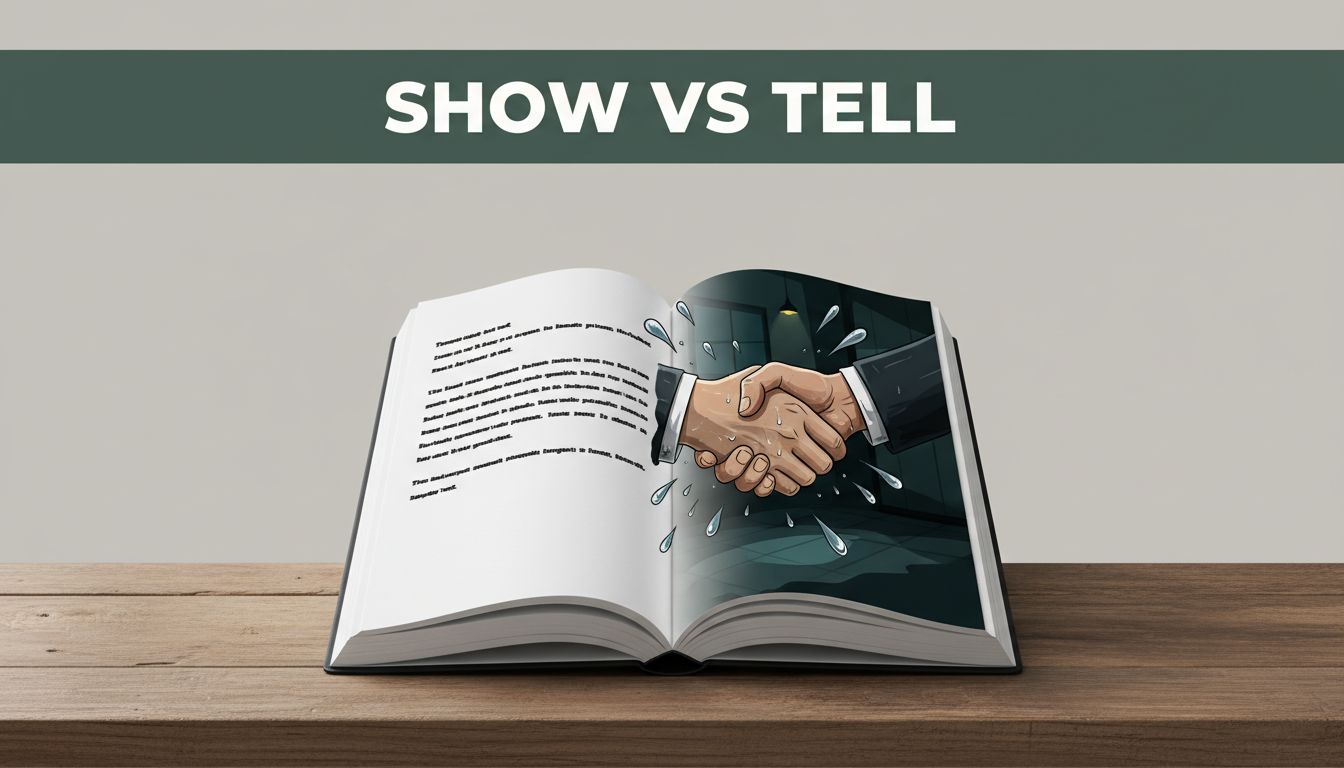
Imagine this: “John was scared.” Now picture this instead: John’s hands shook. Sweat beaded on his forehead. His breath came in short gasps as he scanned the dark room.
That switch pulls you right into the moment. Showing beats telling every time in creative writing. Telling states facts flat out. It says what happens without letting readers feel it. Showing uses details to make readers see, hear, and sense the scene themselves.
You know the frustration. Your story feels distant. Readers skim instead of diving in. They miss the emotional punch because you told them John felt scared instead of showing his fear build.
This post breaks it down. You’ll learn what telling looks like and why it falls flat. Then spot showing that immerses readers. Compare examples side by side. Finally, get fixes and exercises to sharpen your skills. By the end, you’ll turn flat drafts into vivid worlds that hook anyone.
Spot Telling When It Drains the Life from Your Scenes
Telling happens when you state emotions or facts directly. You inform readers instead of letting them experience the story. It keeps everyone at arm’s length.
Take a fantasy scene. “The wizard was angry” tells. Readers nod and move on. No fire in their imagination. Or in romance: “She loved him deeply.” Flat. No spark.
Telling summarizes. It skips the good stuff. Readers want to live the tension, not hear a report. As a result, scenes drag. Pacing slows because nothing pulls them forward.
Think from the reader’s side. They crave connection. Telling robs that chance. It hands over info on a platter. Boring. In contrast, showing invites them in.
Common in first drafts. Everyone does it. But revise, and your story breathes.
Classic Signs of Telling in Everyday Drafts
Watch for these red flags. They sneak into most writes.
Info dumps hit first. You explain backstory in one go. Example: “Elena had grown up in the village since she was five, orphaned young.” Readers glaze over.
Adverbs overload next. “He ran quickly down the hall.” Why not just “sprinted”?
Direct emotion labels pop up often. “She felt happy.” Or “He was sad.” No depth there.
Backstory summaries bore too. “Ten years ago, during the war, Jack lost his family.” Too much at once.
Passive voice creeps in. “The door was opened by the thief.” Weak.
Spot these, and you catch telling early. Self-check each page. Your scenes gain power fast.
Unlock Showing to Let Readers Live Your Story
Showing reveals through senses and actions. Readers piece it together. They feel involved.
Transform that wizard example. Instead of “angry,” show flames flickering in his eyes. His staff cracks against stone. Voice booms like thunder.
Romance shifts too. Drop “loved deeply.” Her fingers trace his scar. She lingers close, heart pounding.
Use the five senses. Sight paints pictures. Sound sets mood. Smell triggers memories. Touch builds tension. Taste adds intimacy.
Benefits stack up. Pacing quickens because details drive action. Characters bond deeper. Readers care more. They turn pages.
Excited yet? Showing makes writing fun. Your story pops off the page.
Sensory Tools That Bring Scenes Alive
Senses ground every scene. Start with sight. Telling: “The forest was beautiful.” Showing: Sunlight filters through leaves. Colors dance on mossy ground.
Sound evokes mood. “The night was quiet” tells. Crickets chirp. Wind whispers through branches. Distant owl hoots.
Smell triggers memory. “The kitchen smelled good” falls flat. Fresh bread wafts from the oven. Cinnamon lingers, warm and sweet.
Touch raises tension. “He was cold” states. Ice bites his skin. Fingers numb, breath clouds the air.
Taste seals intimacy. “The food was delicious” bores. Salt bursts on her tongue. She savors the shared bite.
Layer them in. Scenes come alive.
Actions and Dialogue That Reveal Without Explaining
Actions speak loud. Show anger: He slams the door. Fists clench white.
Joy bursts free. She hugs him tight. Laughter spills out.
Dialogue adds subtext. Skip “hesitant words.” Instead: “I… uh, maybe we should…” She stumbles, eyes down.
Body language hints too. Crossed arms signal defense. A quick smile hides pain.
Subtlety wins. Readers get it without you spelling it out. Tension builds naturally.
Compare Side by Side to Train Your Writer’s Eye
Pair telling and showing. See the shift clear.
Fear: Telling – “She was terrified.” Showing – Her knees buckled. Pulse raced in her ears. Shadows loomed larger.
Love: Telling – “He adored her.” Showing – He brushed hair from her face. Held her gaze soft and long.
Surprise: Telling – “He was shocked.” Showing – Mouth dropped open. Coffee mug slipped from his hand. Shattered on the floor.
Exhaustion: Telling – “She was tired.” Showing – Eyelids droop heavy. Feet drag across the rug. Yawns escape mid-sentence.
| Emotion | Telling Version | Showing Version | Why Showing Wins |
|---|---|---|---|
| Fear | She was terrified. | Her knees buckled. Pulse raced. Shadows loomed. | Builds dread through senses. |
| Love | He adored her. | He brushed her hair aside. Held her gaze. | Creates warmth and connection. |
| Surprise | He was shocked. | Mouth dropped. Mug slipped. It shattered. | Delivers instant visual punch. |
| Exhaustion | She was tired. | Eyelids drooped. Feet dragged. Yawns escaped. | Lets readers feel the drag. |
Showing uses more words sometimes. But impact soars. Engagement spikes.
Minimal telling fits transitions. “Hours passed” works quick. Still, lean on showing most.
Practice these pairs. Your eye sharpens fast.
Questions to Ask When Revising Your Work
Test every sentence. Does it make readers feel or just know?
Can I see or hear it play out?
What senses fit here? Add one or two.
Does action replace the adjective?
Read aloud. Does it drag or flow?
Could dialogue show it better?
For each, tweak quick. “Was happy” becomes grin wide, eyes light up. Revise in passes. Results stun.
Quick Fixes and Exercises to Shift from Tell to Show
Start simple. Highlight telling phrases in your draft. Yellow works.
Brainstorm alternatives. List senses or actions for each.
Layer specifics. Pick the best two or three. Weave them in.
Cut excess. Trim to essentials. Tight prose shines.
Try these exercises daily.
Rewrite a telling paragraph. Pick one from your work. Turn “angry crowd” into shouts rising, faces red, fists pump air.
Build from one emotion. Fear, say. Craft a 100-word scene. No direct labels.
Swap with a friend. They spot tells you miss. Fix together.
Before and after? Night and day. Practice builds habit. Your writing levels up.
Results motivate. One page a day changes everything.
Mastering show over tell transforms your stories. Readers immerse deep. Scenes pulse with life.
Spot tells that distance folks. Use senses, actions, dialogue to draw them close. Side-by-side comparisons train your eye. Fixes and exercises make it stick.
Revise one page today. Feel the difference.
Anton Chekhov nailed it: “Don’t tell me the moon is shining; show me the glint of light on broken glass.”
Share your before-and-after in comments. What shifted for you? Subscribe for more writing tips that spark your best work.