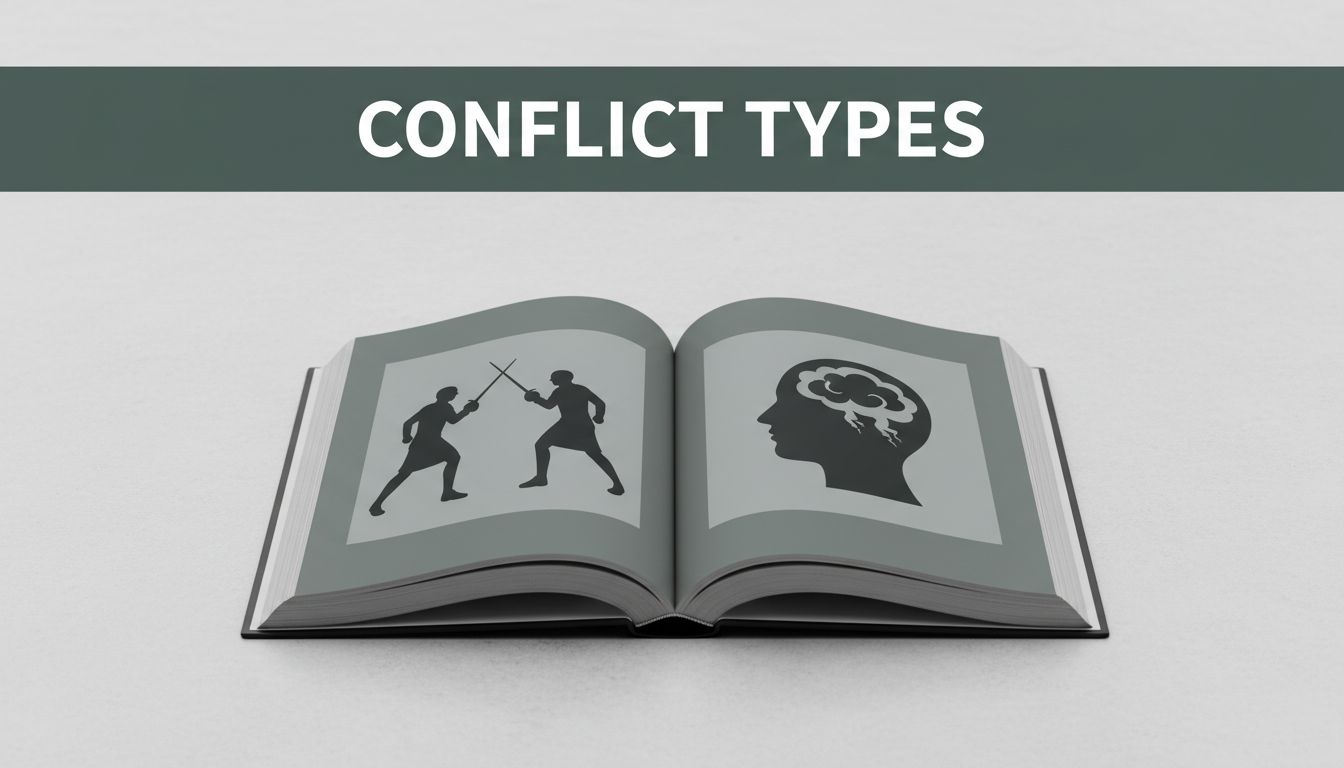
Picture Harry Potter staring down Voldemort in a deadly duel. That’s external conflict in action, a clear clash with an outside enemy. Yet inside Harry’s head, he wrestles with doubt about his own choices and worthiness. That’s internal conflict, the quiet battle no one else sees.
You encounter these forces in every good story. External ones drive the plot with visible fights. Internal ones add emotional layers that make characters feel real. Spotting the difference helps you enjoy books and movies more. It sharpens your analysis of heroes and villains. Writers, it even boosts your own craft.
This post breaks it down simply. First, we cover external conflicts and their types. Next, internal struggles that build depth. Then, tools to tell them apart, plus examples and exercises. You’ll finish ready to spot them anywhere.
Spotting External Conflict: The Outside Battles That Push the Plot
External conflict pits a character against something outside themselves. Think rivals, storms, or strict rules. These clashes create action and keep pages turning. Readers see them right away because they involve real-world obstacles.
Four main types stand out. Person versus person means direct fights with others. Person versus nature involves survival against the wild. Person versus society battles cultural norms or laws. Person versus fate, technology, or the supernatural faces bigger, often unseen powers.
Spot these fast by physical action. Chases, arguments, or disasters signal external force. They push the story forward. Unlike internal fights, you don’t need to read minds to notice.
Person vs. Person: When Characters Clash Head-On
Rivalries define this type. Antagonists scheme or strike directly. Sherlock Holmes faces Moriarty’s plots in Arthur Conan Doyle’s tales. Dialogue crackles with tension. Fists fly, or minds duel.
Look for opposition from another person. It shows in threats, betrayals, or standoffs. The hero reacts outwardly. Tension builds because stakes feel personal.
Person vs. Nature and Society: Fighting Bigger Forces
Nature throws raw power at characters. In Cast Away, Chuck Noland battles an island and storms for survival. He builds shelters and hunts food. Exhaustion marks every step.
Society adds human-made barriers. Romeo and Juliet defy family feuds and city rules. They sneak meetings and plan escapes. These conflicts feel overwhelming because one person can’t change the system alone.
Signs include endurance tests or rule-breaking. Heroes adapt or rebel against the odds.
Person vs. Fate or Tech: The Uncontrollable Unknown
Fate dooms characters from the start. Oedipus in Greek myth runs from a prophecy, yet fulfills it. Modern stories pit heroes against rogue AI or cursed tech.
Reactions stay external. They investigate, fight machines, or challenge gods. Inevitability ramps up dread. Characters push back, but the force seems larger than life.
Uncovering Internal Conflict: The Inner Struggles That Build Deep Characters
Internal conflict happens inside the character’s mind. They battle fears, guilt, or tough choices. No outside enemy appears. Instead, emotions clash.
Common types include self-doubt, guilt, desires against duty, and identity crises. Hamlet ponders “to be or not to be” in Shakespeare’s play. Elsa in Frozen hides her ice powers from fear. These make heroes relatable. Readers connect because everyone faces inner turmoil.
Spot them through hesitation or mood shifts. Monologues reveal thoughts. Choices weigh heavy. Pace slows for reflection. In contrast to external action, this builds quiet tension.
Self-Doubt and Guilt: The Voices Holding Heroes Back
Fear of failure paralyzes. Frodo carries the Ring in Lord of the Rings. Its weight sparks regret and weakness. He paces, questions his strength.
Guilt haunts too. Tears fall. Isolation grows. Physical cues like trembling hands hint at the inner war. Heroes question past actions.
Moral Dilemmas and Identity Questions
Right battles wrong in the mind. Katniss Everdeen volunteers for the Hunger Games. Duty clashes with self-preservation. She debates silently.
“Who am I?” moments hit hard. Identity shifts force growth. Watch for pauses before decisions. Internal talks reveal the struggle.
Key Ways to Tell Internal and External Conflict Apart Every Time
External conflict features outside opponents and visible moves. It drives plot. Internal focuses on self, emotions, and growth. Both often mix for rich stories.
Here’s a quick comparison:
| Aspect | External Conflict | Internal Conflict |
|---|---|---|
| Opponent | Person, nature, society, fate | The character’s own mind/emotions |
| Focus | Action, physical stakes | Feelings, moral choices |
| Visibility | Seen in fights, obstacles | Shown in hesitation, monologues |
| Plot Role | Pushes events forward | Deepens character arcs |
| Example | Luke vs. Empire in Star Wars | Luke’s fear of Vader |
Overlaps happen. Anger at self might mimic a foe fight. Mistake comes when emotions hide as external beef.
Practice on scenes. Note actions first. Then check inner hints.
Your Quick Checklist for Story Analysis
Use these yes/no questions:
- Does the struggle involve an outside person or force?
- Involves visible action like fights or chases?
- Affects other characters directly?
- Shows through physical obstacles?
- Centers on emotions or doubts alone?
- Slows for reflection?
- Drives plot or character growth?
Answer most “yes” for external in the first three. Flip for internal.
Real Examples Where Both Collide
In Divergent, Tris faces a fear serum externally. It attacks her body. Internally, doubts flood: Can she conquer phobias?
Spotting both enriches the read. External amps danger. Internal adds vulnerability. Stories shine brighter.
Practice Exercises to Sharpen Your Conflict Radar
Try these quick drills. Each takes 10-15 minutes.
First, grab a favorite book. List five conflicts. Label each internal or external. Note why.
Second, rewrite a scene. Swap types. Turn a fight into self-doubt. See how pace changes.
Third, watch a movie. Pause at tension. Ask: Outside force or inner battle? Jot notes.
These build skill. Readers grasp layers faster. Writers craft balanced tales. Enjoy stories more now.
Great tales blend both conflicts. External sparks excitement. Internal creates connection. You’ve got the tools to spot them.
Next time you read, apply the checklist. Pick apart your current book. Share examples in the comments below. What story mixes them best? Subscribe for more tips on storytelling. Stories live through these clashes. Dive in and see the magic.